
Micro service architecture
Architecture
Account Broker Service Resilience

Application Load Balancer


Routes incoming traffic to the Account Broker Service Microservices

Ensures high availability and failover support
Account Broker Service Microservices

Registration Server
A&A Service (OAuth2.0)

Account Broker Endpoint
Platform Resilience Layer

Application Load Balancer
Core Platform Microservices
A&A Service (OAuth2.0)

Account Consent Service

Account Redirect URI Service
Account Separated Services
Analytics Layer

Log Data Lake

Reporting

Alarms
AWS environment
Accounting Broker VPC
Account Broker Services

TPP onboarding
TPP authentication and authorization

Routing requests to downstream consent and data services
Key Components

Public Subnets

NAT Gateway

Bastion Host
Private Subnets

Load Balancer

ECS Fargate Services
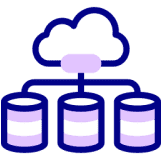
Aurora DB Cluster
Accounting Platform VPC
Account Aggregation Services

Consent handling

Token validation
Data access to account/balance/transaction services
Key Components
Public Subnets
NAT Gateway
Bastion Host
Private Subnets

App Load Balancer
ECS Fargate Services

Amazon Aurora
Security & Secrets Management
AWS Secrets Manager

Stores sensitive configuration like DB passwords, tokens, API keys
AWS IAM (Identity and Access Management)
Role-based access control across services
AWS Shield / WAF (implied)

Protects from DDoS (likely integrated with API Gateway)
Monitoring & Notification
Amazon CloudWatch

Monitors ECS health, API latency, error rates

Collects logs and custom metrics
Amazon SNS

Triggers alerts for failures (e.g., service down, consent failures)
Key Services by Functional Domain

Broker Services
Consent Handling

Data Services

Infra & Support
List of Services
Registration

Onboards Third Party Providers (TPPs) into the system
Authentication and authorisation

Issues and validates OAuth2.0 tokens for all TPP interactions
Account Broker Service

Acts as an intermediary API layer between external clients (TPPs) and backend microservices
Security
Protocol & Standards
OAuth2.0
Used for secure token-based authentication between services, TPPs, and the platform
TLS 1.2 and above

All service communications are encrypted using TLS (Transport Layer Security)
Access Control
RBAC (Role-Based Access Control)

Access to services and data is permissioned based on user or system roles

Limits exposure and adheres to the principle of least privilege
Infrastructure-Level Security
Private Subnet Deployment

Microservices are deployed inside private subnets of the Virtual Private Cloud (VPC)
Secrets and Certificate Management
AWS KMS (Key Management Service)

Manages encryption keys for secure data handling and token signing

Enables centralized control over key access and rotation policies
AWS Secrets Manager

DB passwords

OAuth2.0 client secrets

TLS certificates
API Gateway
Gateway Role in Architecture
API Gateway

Traffic routing

Request transformation

Security enforcement
Platform Used
You can use either

AWS API Gateway

Or another cloud-native API gateway (e.g., Azure API Management, Kong, Apigee)
Security Features
Built-in Security (AWS API Gateway)

OAuth2.0 & JWT validation

HTTPS TLS 1.2 encryption

Resource-level IAM policies
Access Control

API Key + Password for premium user access

Custom authorizers can be used for fine-grained access control using Lambda or Cognito
Monitoring & Logging
Integrated with AWS CloudWatch

Logs requests and responses

Tracks usage per TPP or endpoint

Enables alerting on anomalies or failure patterns
Optionally connect to

X-Ray for end-to-end request tracing

SNS/Email for notification-based alerts
Integration with Backend
The API Gateway routes traffic to

Application Load Balancers for microservices

Lambda functions for lightweight workflows

VPC private integrations for secure, isolated services